


Expert in Roswell & Alpharetta
Timing Belt & Water Pump Replacement
Prevent Catastrophic Engine Failure
Whether you are commuting heavily up and down GA-400 into Alpharetta or making the daily school run through the historic neighborhoods of Roswell, your vehicle’s engine is performing thousands of precise, explosive mechanical actions every single minute. At the absolute center of all this mechanical chaos is a single, heavy-duty strip of reinforced rubber that keeps your entire engine from destroying itself: The Timing Belt.
Unlike a flat tire or a dead battery, a broken timing belt will not just leave you stranded on the side of the road, in most modern vehicles, a snapped timing belt will cause catastrophic, irreversible internal engine damage that can cost thousands of dollars to repair.
At our premier auto repair facility serving the Roswell and Alpharetta communities, we specialize in comprehensive timing belt and water pump replacements. Our ASE-certified technicians do not cut corners. We perform a complete, factory-scheduled front-engine service, replacing the belt, the water pump, the hydraulic tensioners, and the idler pulleys, ensuring your engine runs perfectly in sync for another 100,000 miles.
Request Your Auto Repair Service Today

Flushing Process
What Exactly Is a Timing Belt, and Why Is It So Critical?
To understand why replacing this rubber belt is one of the most important investments you will ever make in your vehicle, you have to understand the internal anatomy of your engine.
Your engine consists of two main halves:
- The Bottom Half (Cylinder Block): This houses the heavy pistons moving rapidly up and down, connected to the spinning crankshaft.
- The Top Half (Cylinder Head): This houses the delicate metal valves that open and close to let air and fuel in, and exhaust gases out. These are controlled by the spinning camshaft(s).
The Timing Belt is the maestro of the engine. It connects the crankshaft to the camshaft, ensuring they rotate in perfect, mathematical synchronization. When a piston travels upward, the valves directly above it must be closed. If the timing belt snaps, skips a tooth, or breaks while you are driving, that synchronization is instantly lost.
The Danger of the "Interference Engine"
The vast majority of modern cars (like Hondas, Toyotas, Audis, and Volkswagens) are built with what is called an "Interference Engine." In this high-compression design, the valves and the pistons physically share the exact same space inside the cylinder, just at different fractions of a second.
If the timing belt breaks while the engine is running, the camshaft stops spinning, and the delicate valves freeze in the "open" position. However, the heavy pistons in the bottom of the engine keep moving upward with tremendous, violent force. The pistons will violently smash into the open valves, bending them, shattering the cylinder head, and effectively destroying your engine in a split second. A $800 preventative maintenance service instantly becomes a $5,000 complete engine rebuild.
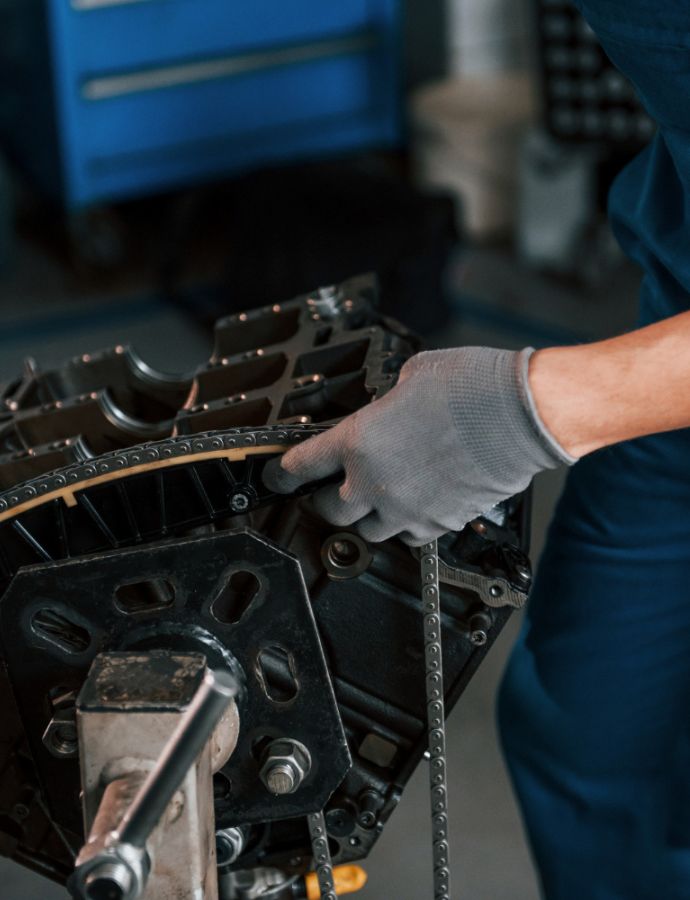
The Silent Killer
Warning Signs And The Lack Thereof
A Rhythmic Ticking or Clicking Noise
If you hear a fast, continuous ticking noise coming from the front of the engine that speeds up as you press the gas pedal, it could indicate low oil pressure, or it could mean the timing belt is fraying or the hydraulic tensioner has failed and is slapping against the cover.
Engine Misfires and Rough Idling
If the belt has stretched over time or "jumped a tooth" on the gear, the engine's timing will be slightly off. The spark plugs will fire at the wrong moment, causing the car to shake, idle roughly, and lose significant power.
Oil or Coolant Leaks
If the camshaft seals or crankshaft seals begin to leak oil, or if the water pump leaks coolant onto the timing belt, the rubber will rapidly degrade, soften, and eventually snap.
The Car Cranks But Won't Start
If the belt has already snapped while the car was parked, you will turn the key and hear the starter motor spinning much faster and higher-pitched than normal, but the engine will never actually start.
Flushing Process
Why Do We Replace the Water Pump at the Same Time?
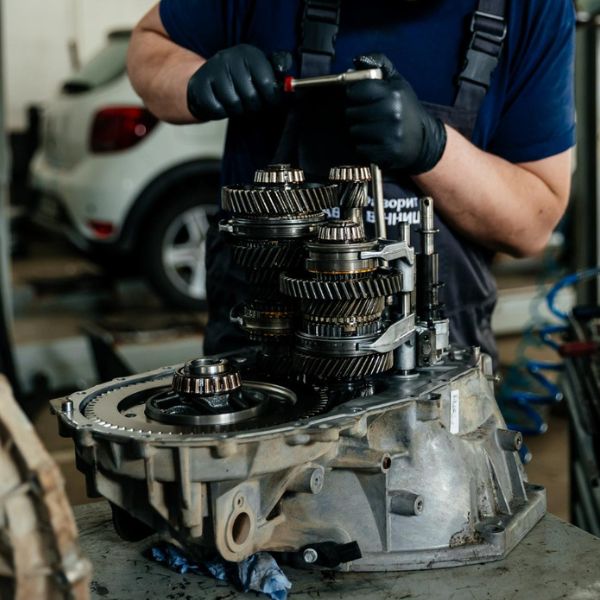
When you receive an estimate for a timing belt replacement at our shop, you will notice that we also include a new Water Pump, along with new tensioners and idler pulleys. Many customers ask, "If my water pump isn't leaking, why do I need to replace it?"
The answer comes down to smart engineering and saving you money on labor. In almost all vehicles equipped with a timing belt, the water pump is located directly behind the timing belt and is actually driven by the timing belt itself.
To gain access to the timing belt, our technicians have to spend several hours disassembling the front of your engine, removing drive belts, engine mounts, and protective covers. Since we have already done 95% of the heavy labor to reach the timing belt, replacing the water pump takes only a few extra minutes and the cost of the part itself.
If you choose to skip the water pump, and it begins to leak coolant just 10,000 miles later, we will have to charge you for all of those hours of labor all over again to remove the brand-new timing belt just to access the failing pump. Furthermore, a seized water pump bearing will instantly shred your new timing belt. Replacing them together is the only financially and mechanically responsible way to perform this service.
Which Do You Have?
Timing Belt vs. Timing Chain
It is important to note that not all cars have a rubber timing belt. Many modern vehicles (and older trucks) use a heavy-duty metal Timing Chain.
Timing Belts
Made of reinforced rubber. They run quieter and are cheaper to manufacture, but they have a strict expiration date and must be replaced at specific intervals.
Timing Chains
Look like heavy-duty bicycle chains. They are bathed in engine oil and are generally designed to last the "lifetime" of the engine, provided you are meticulous about your routine oil changes. (If you skip oil changes, a timing chain will stretch and fail!).