Expert in Roswell & Alpharetta
Auto A/C Repair & Air Conditioning Recharge
Beat the Georgia Heat
If you live in Roswell & Alpharetta, Georgia, you know that the summer heat and stifling humidity are relentless. When the temperature outside climbs into the upper 90s, the interior cabin of a parked car can easily exceed 130 degrees in a matter of minutes. In these brutal conditions, a fully functioning automotive air conditioning system is not just a luxury, it is an absolute necessity for your comfort, safety, and sanity.
When you turn on your car’s A/C and are greeted with a blast of stale, warm air, the frustration is immediate. At our premier auto repair facility in Roswell & Alpharetta, our ASE-certified technicians specialize in advanced climate control diagnostics and repair. Whether your system needs a simple refrigerant recharge, a complex electrical diagnosis, or a complete A/C compressor replacement, we have the state-of-the-art equipment required to restore ice-cold air to your cabin quickly and correctly.
Request Your Auto Repair Service Today

The Science of Cool
How Your Car’s A/C System Actually Works
To understand why your A/C is failing, it helps to understand how it produces cold air. Contrary to popular belief, an air conditioner does not actually "make" cold air. Instead, it operates by removing heat and moisture from the air inside your cabin.
Your vehicle's A/C is a highly pressurized, completely sealed loop that relies on a specialized chemical gas called refrigerant (commonly referred to as Freon). Here is how the four main components work together in a continuous cycle:
The Compressor
This is the heart of the system, driven by the engine's serpentine belt. It takes low-pressure refrigerant gas and compresses it into a high-pressure, high-temperature gas, pumping it forward.
The Condenser
Located at the very front of your car (usually right in front of the radiator), the condenser acts like a mini-radiator. As outside air flows through its fins, it cools the hot, pressurized gas, turning it into a high-pressure liquid.
The Expansion Valve
This tiny valve creates a sudden restriction in the system. As the high-pressure liquid forces its way through the valve, it rapidly expands and drops in pressure, turning into a freezing cold, low-pressure mist.
The Evaporator Core
Hidden deep inside your dashboard, this component looks like another small radiator. The freezing mist flows through it, while your HVAC blower motor pushes warm cabin air across its icy fins. The refrigerant absorbs the heat from the air, and ice-cold air blows out of your vents. The refrigerant then turns back into a gas and returns to the compressor to start the cycle all over again.
Needs Immediate Repair
5 Warning Signs
Air conditioning systems rarely fail without warning. If you notice any of these five symptoms during your Roswell & Alpharetta commute, bring your vehicle to our shop before a minor issue causes major compressor damage
Blowing Warm or Room-Temperature Air
This is the most obvious sign. It almost always indicates that the system is low on refrigerant due to a physical leak somewhere in the closed loop.
Weak Airflow from the Vents
If you have the fan turned all the way up but barely any air is coming out, you likely have a clogged cabin air filter, a failing blower motor, or a broken "blend door" actuator that is trapping the air inside the dashboard.
Foul, Musty Odors
As the evaporator core removes heat, it also removes moisture (which is why you see a puddle of water under your car on hot days). If the drain tube becomes clogged, water pools inside the dark dashboard, allowing mold and mildew to grow directly on the evaporator fins. We offer specialized cleaning treatments to kill the mold and clear the drain.
Loud Grinding or Squealing Noises When the A/C is On
If turning on the A/C results in a loud squeal or a harsh grinding noise, the A/C compressor clutch is failing, or the internal bearings of the compressor are tearing themselves apart. Turn the system off immediately to prevent metal shrapnel from contaminating the rest of the system.
A/C Starts Cold, But Turns Warm After 15 Minutes
This extremely frustrating symptom often points to an electrical issue (like a failing compressor relay), a frozen expansion valve, or a malfunctioning cooling fan that fails to push air across the condenser when the car is stopped in traffic.
Why We Never Just "Top It Off"
The "DIY Recharge Can" Myth
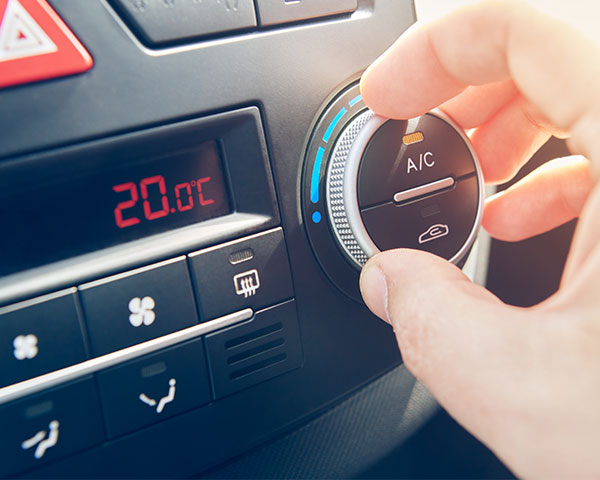
If your A/C is blowing warm, it is tempting to go to a local Roswell & Alpharetta auto parts store and buy a cheap DIY "A/C Recharge" can. We strongly advise against this. Your A/C is a hermetically sealed system. Refrigerant does not evaporate, burn up, or get "used up" like gasoline or engine oil. If your car is low on Freon, you have a physical leak. Simply topping it off is like putting air in a tire with a nail in it, it will leak out again, wasting your money.
Furthermore, those DIY cans are notoriously dangerous for your car. They often contain "Stop Leak" chemicals. These sealants are essentially liquid glue designed to harden when they hit the air. Unfortunately, they also harden inside the microscopic passageways of your expansion valve and our expensive shop recovery machines, often causing thousands of dollars in irreversible damage to your entire A/C system.
Unlike a simple "drain and fill" (which only removes about 40% of the old fluid sitting in the bottom pan), we utilize state-of-the-art fluid exchange machines.
Our Process
Our Advanced A/C Diagnostic & Leak Detection
Heating Repair
We Keep You Warm in the Winter, Too
While Roswell & Alpharetta is known for its brutal summers, our winters can get surprisingly freezing. Your car’s heating system is actually tied directly to your engine's cooling system. Hot engine coolant is diverted into a small radiator inside your dash called the heater core. If your heater is blowing cold air in December, it usually points to a clogged heater core, a failing thermostat, or a low engine coolant level. Our technicians are fully equipped to diagnose and repair your vehicle's HVAC heating system as well.