Suspension, Steering, and Shock Repair
Restore Your Smooth, Safe Ride
Whether you are commuting at highway speeds down GA-400 into Alpharetta or navigating the historic, sometimes uneven streets of downtown Roswell, your vehicle’s suspension system is working overtime. Most drivers think of their car’s suspension merely as a "comfort feature" designed to keep the cabin smooth and prevent spilled coffee. However, in the automotive engineering world, your suspension and steering systems are actually critical safety components.
Your suspension system’s primary job is to keep your tires firmly planted on the pavement at all times. If your shocks and struts are worn out, your tires will literally bounce off the road surface. A tire that is not touching the road cannot steer, and more importantly, it cannot brake.
At our premier auto repair facility serving the Roswell-Alpharetta area, we specialize in comprehensive steering and suspension diagnostics. We do not just blindly replace parts; we conduct rigorous, bumper-to-bumper physical inspections to identify exactly which bushings, joints, or hydraulic cylinders have failed, ensuring your vehicle drives perfectly straight, handles corners safely, and stops on a dime.
Request Your Auto Repair Service Today
How Your Suspension System Actually Works
Your suspension is a complex system of steel components, hydraulic parts, and rubber bushings working together to absorb impact and keep your ride stable. If you hear clunking noises, it’s often a sign that key components are wearing out. Over time, constant stress, heat, and road debris cause parts to deteriorate bushings can tear, seals may leak, and joints can lose lubrication, affecting performance and comfort.
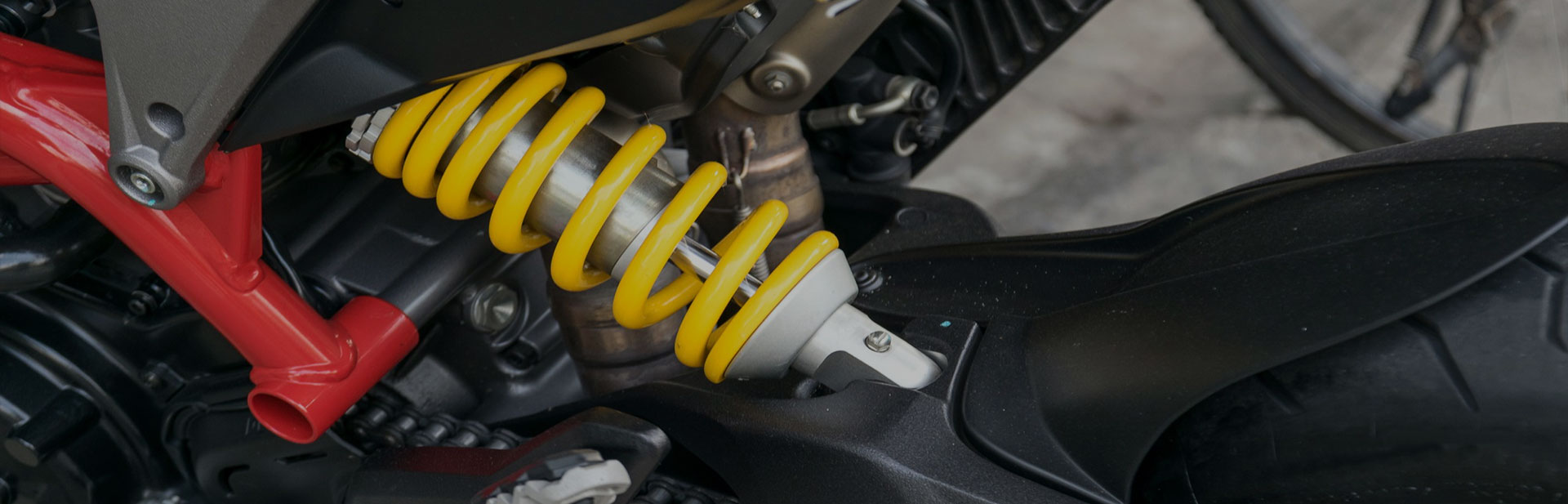
The Coil Springs
These heavy-duty steel coils support the massive physical weight of your vehicle. When you hit a pothole on Mansell Road, the spring compresses to absorb the violent upward force, keeping the car body stable.
Shocks and Struts (The Dampers)
If your car only had springs, hitting a bump would cause it to bounce up and down uncontrollably for a mile. Shock absorbers and Struts are hydraulic cylinders filled with thick oil and pressurized gas. Their job is to control, slow down, and "dampen" the bouncing energy of the springs.
Control Arms and Bushings
The control arms act as the "hinges" that connect your wheels to the frame of the car, allowing the wheels to move up and down over bumps while staying perfectly aligned. The connections are cushioned by dense rubber "bushings" that absorb harsh vibrations. Over time, this rubber dries out, cracks, and tears.
Ball Joints and Tie Rods
The ball joints act exactly like the ball-and-socket joints in your shoulders, allowing your front wheels to pivot left and right when you turn the steering wheel. The tie rods physically connect your steering rack to the wheels.

The 6 Warning Signs

Loud Clunking, Popping, or Rattling Over Bumps
This is the most common complaint we hear. If you hear a harsh, metal-on-metal "clunk" or a hollow rattling sound when you drive over a speed bump or a pothole, you likely have a torn control arm bushing, a blown strut mount, or a broken sway bar link.

The "Nose-Dive" When Braking
If you hit the brakes firmly and the front hood of your car aggressively dips toward the pavement, your front shocks or struts are completely blown. They no longer have the hydraulic strength to hold the weight of the engine up under braking forces. This drastically increases your stopping distance and is highly dangerous.

The Car "Squats" or "Rolls"
Similar to the nose-dive, if the rear end of your car squats down toward the ground when you accelerate, or if the entire cabin leans heavily to one side when taking a sharp corner, your suspension lacks the rigidity needed to stabilize the chassis.

Uneven or "Cupped" Tire Wear
Take a look at the tread on your tires. If the inside or outside edge is wearing out much faster than the rest of the tire, your alignment is severely out of specification (usually caused by a failing suspension part). If you see "cupping" (smooth, bald, scalloped dips running around the tire), your shocks are dead, and the tire is violently bouncing down the highway.

A Bouncy, Floating Ride
Try the "Bounce Test." Go to the corner of your parked car and push down hard on the fender with your body weight, then let go. The car should bounce up, settle down, and stop. If it continues to bounce up and down three or four times, your shocks are completely empty of fluid.

The Steering Wheel is Crooked or Pulling
If you are driving straight down a flat highway but your steering wheel is tilted to the left or right, or if the car aggressively pulls into another lane when you let go of the wheel, your steering geometry is compromised. You likely have a bent tie rod, a worn ball joint, or need an alignment.